Our History
Learn about the ancestral origins of our people and our deep connection to the whenua and awa.
Ancestral Maunga and Awa
Taranaki Maunga is our ancestral maunga (mountain). According to traditional accounts, Taranaki Maunga journeyed from the Central Plateau to his current location, after being scarred in battle fighting Tongariro for the maiden Pihanga.
Our tūpuna (ancestors) have been centralised around the maunga since he came here. The early tūpuna, who were living here before the voyaging waka (canoes) arrived from Polynesia, were known as Te Kāhui Maunga.
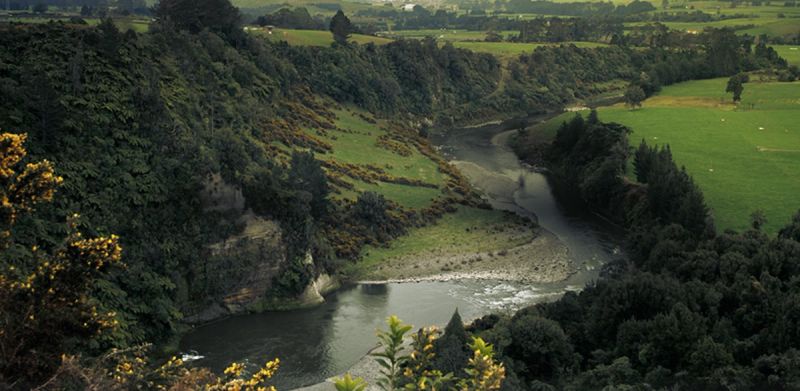
Our ancestral awa (river) is the Waitara. The name Whaitara or Waitara originates with the tūpuna Wharematangi and his quest to locate his father, Ngārue. His mother gave him a tara (dart) and told him that on his fifth throw he would find his father. His first four throws landed in the areas of other iwi (tribes). On his fifth throw the tara turned and landed in the side of his father’s whare (house) at the river mouth. The river was named Te Whai-tara-nui-a-Ngārue (follow the dart of Ngārue) after this event.
The Waitara awa (river) was a vital waka (canoe) transport and trade route for the interconnected hapū (kin groups) of the awa. It linked a network of pā (settlements) and kāinga (villages) along the awa, and facilitated passage to the coast and beyond.
Pukerangiora Hapū have connections spanning generations with the many other iwi (tribes) and hapū (kin groups) who lived along the awa – among these are Ōtaraua, Manukorihi, and Ngāti Rahiri hapū. We are all people of the Waitara awa.
Pukerangiora Pā was networked with a number of nearby pā, including: Te Awa-te-Take Pā, Manukorihi Pā, Ōtaraua Pā, Te Nganana Pā and Rimutauteka Pā.
Early Tūpuna: Tamarau, Rongoueroa and Awanuiarangi
The early tūpuna Tamarau is the origin of the iwi name of our people: Te Ātiawa. Tamarau descended from the heavens and formed a union with Rongoueroa, after he saw her bathing in the Waiongana River. They had a son called Awanuiarangi. The people of Te Ātiawa descend from them. The ‘awa’ part of the iwi name is significant. It is important to understand the whakapapa back to the early ancestors, because this connects our people of Pukerangiora Hapū to the peoples of other iwi and hapū. It also helps keep the knowledge and traditions of the tūpuna alive.